Paint protection film, or PPF, is a clear thermoplastic urethane film applied to a vehicle's painted surfaces to physically shield the paint from rock chips, scratches, abrasion, and chemical staining.
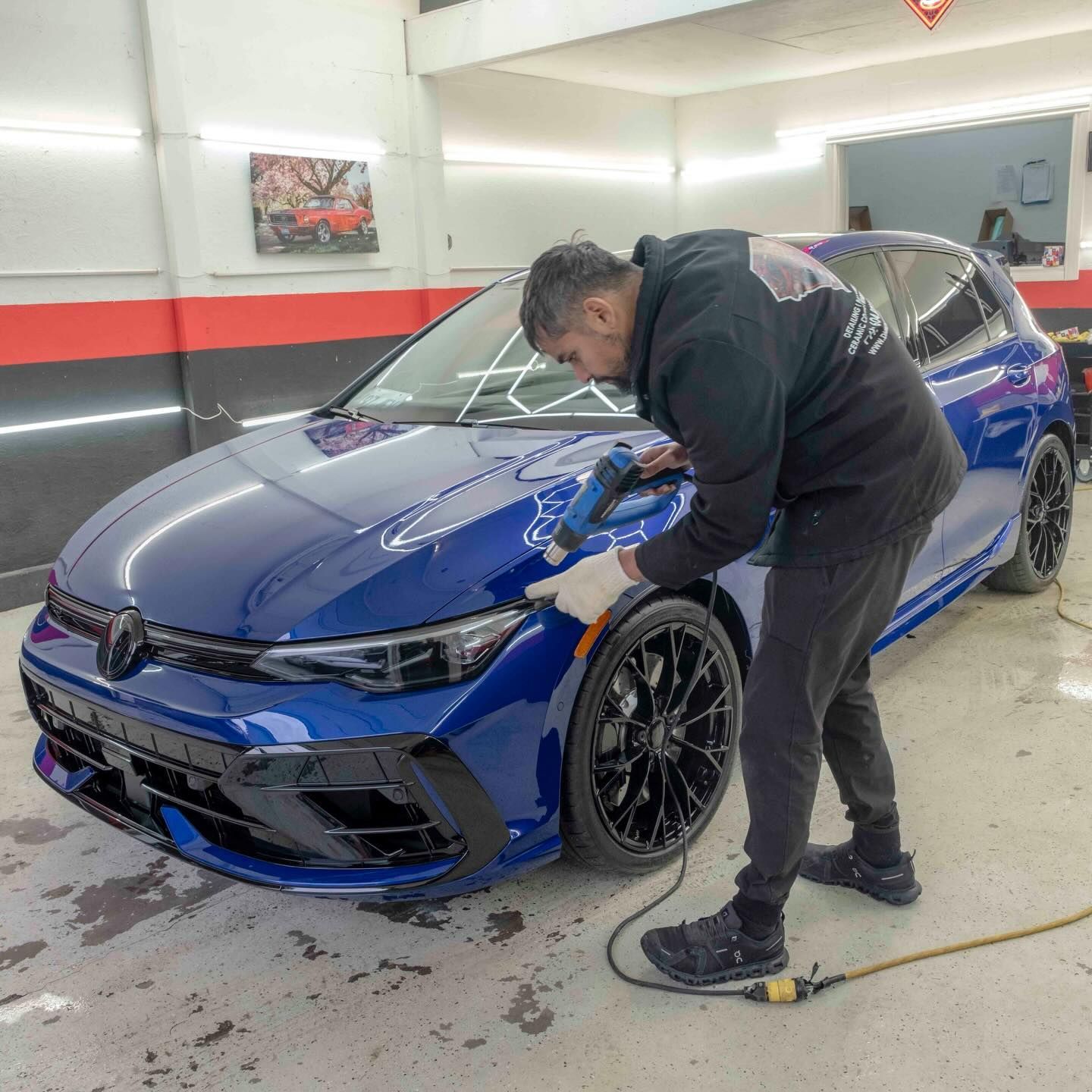
PPF bonds to the surface with an adhesive layer and absorbs impacts that would otherwise crack or dent your clear coat. Think of it as a transparent, replaceable skin that takes the damage so the paint underneath doesn't. Most modern films are self-healing, meaning light scratches and swirl marks disappear with heat from the sun or warm water.
Quick facts about paint protection film:
- Clear thermoplastic urethane film, roughly 8 to 10 mil thick
- Physically absorbs rock chips, scratches, and abrasion
- Bonds to paint with a clear adhesive layer
- Most films self-heal light scratches with heat
- Lasts 7 to 10+ years depending on film quality
- Can be applied to the full vehicle or high-impact areas only
What Paint Protection Film Is Actually Made Of
PPF is built in layers, and the engineering of those layers is what separates a premium film from a cheap one. The top layer is a clear coat that provides gloss and self-healing properties. Below that sits the thermoplastic polyurethane, the thick, flexible core that does the actual impact absorption. Underneath is an adhesive layer that bonds the film to your paint without damaging it on removal. The whole stack is designed to flex, stretch around curves, and take a hit without yellowing or cracking over a decade of sun exposure.
The layers of a PPF panel:
- Clear top coat — gloss, stain resistance, and self-healing
- Thermoplastic polyurethane (TPU) — the thick impact-absorbing core
- Acrylic adhesive — bonds the film to the paint
- Release liner — removed during installation
How Paint Protection Film Protects Your Paint
PPF works by physics. When a rock hits a panel covered in film, the urethane layer flexes and disperses the energy across its surface instead of letting it concentrate on one point of the clear coat. The chip that would have gouged your paint gets absorbed by a layer designed to be sacrificed. Self-healing films take it further: the clear top coat is engineered to return to its original shape when warmed, so the fine scratches from washing and daily driving vanish on a hot day or with a pass of warm water.
What PPF defends against:
- Rock chips and road debris
- Scratches from washing, branches, and brushes
- Abrasion from sand and salt
- Bug acid and bird dropping etching
- Light keying and door dings
- UV-related fading on the paint beneath
What Paint Protection Film Won't Do
PPF is the strongest paint protection available, but it has limits worth being honest about. It won't stop a deep gouge from a key dragged hard across a panel. It won't prevent a dent from a serious impact, because it protects paint, not sheet metal. A cheap film installed poorly can yellow, lift at the edges, or trap dirt. And PPF on its own doesn't give you the deep hydrophobic gloss that a coating does, which is why many owners pair the two.
The limits of PPF:
- Won't prevent dents or structural damage
- Won't stop deep, deliberate gouges
- Low-quality film can yellow or peel over time
- Poor installation leads to lifting edges and visible seams
- Doesn't replace the hydrophobic properties of a ceramic coating
Self-Healing PPF: How It Works
The self-healing property is the feature that surprises most first-time PPF owners. The clear top coat of modern film is an elastomeric polymer with shape memory. When the surface picks up light scratches or swirl marks from normal use, applying heat lets the polymer relax back to its molded state, erasing the marks. A sunny afternoon does it on its own. Warm water from a hose speeds it up. Deeper cuts that reach past the top coat won't heal, but the everyday wear that dulls unprotected paint simply disappears.
What self-healing covers and what it doesn't:
- Heals: light wash marks, fine swirls, surface scuffing
- Heals with: sunlight, warm water, or gentle heat
- Won't heal: deep cuts, gouges, or damage through the top coat
- Speeds the process: warm water rinse or a heat gun in skilled hands
How Long Does Paint Protection Film Last?
Paint protection film typically lasts 10 to 12 years, with premium films backed by manufacturer warranties in that same range. Lifespan depends on the quality of the film, the skill of the installation, the climate the car lives in, and how it's maintained. A quality film installed cleanly will stay clear and bonded for the better part of a decade. A budget film or a rushed install can start yellowing or lifting in a couple of years. When the film reaches the end of its life, it peels off and a fresh layer goes on, leaving the original paint untouched.
Factors that affect PPF lifespan:
- Film quality and manufacturer grade
- Installer skill and cleanliness of the application
- Climate, sun exposure, and road conditions
- Wash technique and ongoing maintenance
- Whether the film is a current-generation product or an older formula
PPF vs Ceramic Coating
This is the comparison that confuses most car owners, and the honest answer is they're not competitors. PPF is physical protection: a thick film that absorbs impacts. A
ceramic coating is chemical protection: a thin, hard layer that repels water and resists UV and staining. PPF stops the rock chip. Ceramic coating makes the surface slick, glossy, and easy to clean. The strongest setup is both, with PPF on the high-impact panels and a coating over the top for hydrophobic performance and easier maintenance.
How the two compare:
- PPF — thick urethane film, absorbs impacts, self-heals, 7 to 10+ years
- Ceramic coating — thin chemical layer, repels water and UV, 2 to 7+ years
- PPF strength — rock chips, scratches, physical damage
- Ceramic strength — gloss, hydrophobics, easy washing, chemical resistance
- Best result — PPF and ceramic coating layered together
For a full breakdown of which one fits your situation, read our
PPF versus ceramic coating comparison.
How Much Does Paint Protection Film Cost?
Paint protection film costs $800 to $2,000 for partial coverage and $4,000 to $8,000+ for a full-vehicle wrap in Canada. Price depends on how much of the car is covered, the contours of the panels, the film brand, and the installer's skill. Partial packages cover the high-impact zones: front bumper, hood, fenders, mirrors, and headlights. Full wraps cover every painted surface. Complex curves and large vehicles take more film and more labor, which is what drives the upper end of the range.
What goes into the price:
- Coverage level — partial high-impact package versus full wrap
- Vehicle size and the complexity of its panels
- Film brand and warranty length
- Installer experience and certification
- Add-ons like ceramic coating over the film
Common PPF Coverage Packages
Most shops offer PPF in tiered packages so owners can match the protection to their budget and how they use the car. A daily commuter takes its worst abuse on the front end, so a partial front package handles the majority of real-world damage. Track cars, road-trip vehicles, and high-value cars often justify the full wrap. The right package is the one that covers where your specific car actually gets hit.
Typical PPF packages:
- Partial front — bumper, partial hood, fenders, mirrors
- Full front — full bumper, full hood, full fenders, mirrors, headlights
- Track package — full front plus rocker panels and rear arches
- Full vehicle — every painted surface wrapped
Who Should Get Paint Protection Film
PPF makes sense when the cost of protecting the paint is less than the cost of repairing it, and when keeping the car looking right matters to you. New vehicle owners protecting factory paint, luxury and performance car owners, anyone who racks up highway miles, and people who plan to sell or trade in with the original paint intact are the typical fit. If you drive an older car you won't keep long, full PPF is hard to justify. If you just bought something you intend to keep and love, the front end alone pays for itself the first time a rock hits at highway speed.
PPF is worth it if:
- Your vehicle is new or recently repainted
- You drive significant highway miles
- The car has real value worth preserving
- You plan to keep it several years or sell with original paint
- Stone chips and road rash on the front end would bother you
If you're in the Langley or Fraser Valley area and want to know which PPF package fits your vehicle and how you drive, reach out for a quote and we'll walk you through the options. You can also learn more about the film we install and our full paint protection film service.