PPF vs Ceramic Coating: Quick Answer Guide
Quick answer: Paint protection film, or PPF, is the choice for stopping rock chips, road debris, light scratches, and impact damage. Ceramic coating is the choice for gloss, UV protection, chemical resistance, water beading, and easier washing. For most Abbotsford and Fraser Valley drivers, the strongest setup is PPF on the high-impact areas with ceramic coating over the full vehicle.
Two products. Two different jobs. People line them up like you have to pick a winner, but they guard against completely different threats. PPF stops what flies at your paint. Ceramic coating stops what settles on it. One takes the hits. The other shrugs off the grime. Run them together and each one covers the gap the other leaves.
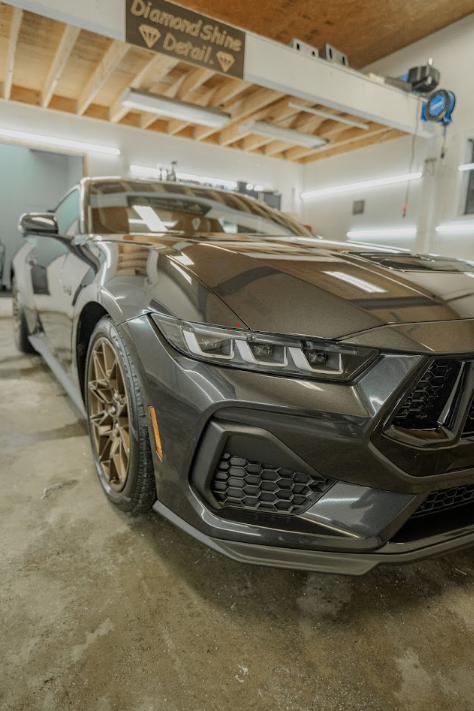
At Diamond Shine Detail & Ceramic Coatings in Abbotsford, we install STEK paint protection film and professional ceramic coatings for drivers who want stronger protection, less time spent cleaning, and a vehicle that stays sharp longer.
Which One Should You Choose?
Choose paint protection film if your real worry is physical damage. Rock chips, road debris, highway miles, front-end battle scars, or keeping a new vehicle out of the body shop. PPF is the heavier hitter for bumpers, hoods, mirrors, fenders, and rocker panels. The panels that take the abuse.
Choose ceramic coating if your real worry is keeping the vehicle glossy, fast to wash, and protected from sun, water spots, bird droppings, tree sap, road film, and chemical fallout. It will not stop a rock. It makes almost everything else slide right off.
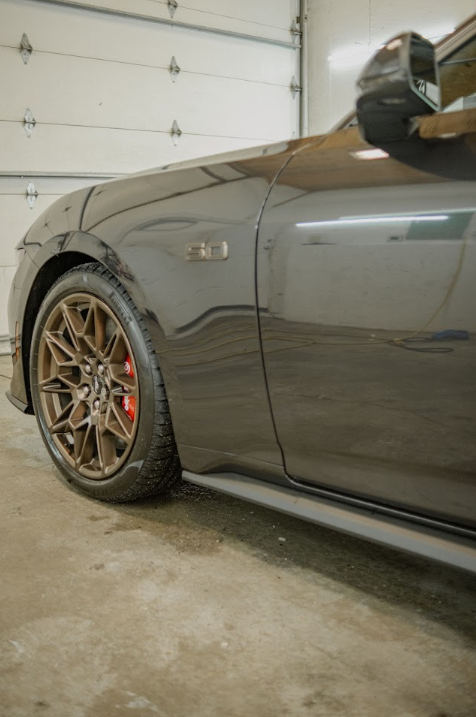
Choose both if you want the full picture. The common premium build is PPF on the high-impact areas first, then ceramic coating over the paint and the film. Impact protection where the road throws punches, plus gloss, slickness, and easier upkeep across the whole exterior.
Best Setup for Abbotsford and Fraser Valley Drivers
For daily drivers in Abbotsford, Langley , Chilliwack, Mission, and across the Fraser Valley, the right answer usually comes down to how and where you drive.
- Highway commuters: PPF on the front bumper, hood, fenders, mirrors, and rocker panels, plus ceramic coating for faster washes.
- New vehicle owners: PPF before the first chips land, then ceramic coating to protect the gloss and cut down maintenance.
- Luxury, Tesla, or performance vehicles: Full front PPF or full body PPF with ceramic coating over top.
- Budget-minded owners: Start with ceramic coating for full-vehicle gloss and easier upkeep, then add targeted PPF to the highest-impact areas.
- Long-term owners: Pair PPF and ceramic coating to protect resale value and slow down visible wear.
What Neither PPF Nor Ceramic Coating Does
PPF and ceramic coating are both excellent paint protection options, but neither product makes your vehicle indestructible. They protect your finish, not the structure of the vehicle.
Neither PPF nor ceramic coating will stop dents, hail damage, deep scratches, collision damage, or damage from hard impacts. PPF can absorb light impact from rock chips, road debris, and minor surface contact, but it cannot prevent every mark. Ceramic coating makes the surface slicker, glossier, and easier to clean, but it does not create a physical barrier against rocks or sharp objects.
The best way to think about it is simple: PPF is for impact protection. Ceramic coating is for surface protection and easier maintenance. If you want the strongest overall protection, use PPF on the high-impact areas and ceramic coating over the paint and film.
PPF vs Ceramic Coating Cost
Paint protection film usually costs more than ceramic coating because it requires more material, more cutting, more panel-by-panel installation time, and more precision around edges, curves, badges, sensors, mirrors, bumpers, and body lines. Ceramic coating is still a professional installation, but the product is applied as a liquid after the paint has been washed, decontaminated, and corrected.
In Canada, professional ceramic coating typically starts around $800 for a basic package on a small vehicle and can climb past $2,500 for larger vehicles, multi-year coatings, extra layers, wheels, glass, trim, or heavier paint correction before application.
Paint protection film typically costs more because the film is a thick, physical layer installed on specific panels. Partial PPF coverage usually falls around $800 to $2,000, depending on the vehicle and coverage area. Full-vehicle PPF can range from roughly $4,000 to $8,000+ because every painted panel is wrapped.
Typical PPF Coverage Options
* Partial front: bumper, partial hood, partial fenders, and mirrors.
* Full front: full bumper, full hood, full fenders, mirrors, and headlights.
* Track package: full front plus rocker panels, lower doors, and rear impact areas.
* Full vehicle: every painted surface wrapped in film.
The cheapest option is not always the best value. If your main concern is rock chips on the front end, targeted PPF on the high-impact areas can make more sense than coating alone. If your main concern is gloss, easier washing, UV protection, and chemical resistance, ceramic coating is usually the better first investment.
For many Abbotsford and Fraser Valley drivers, the best value is a combination: PPF on the front bumper, hood, fenders, mirrors, and rocker panels, then ceramic coating over the paint and film. That gives you physical impact protection where road debris hits hardest, plus gloss, slickness, and easier maintenance across the full vehicle.
Because pricing depends on vehicle size, paint condition, coverage area, film choice, coating tier, and prep work, the best next step is to contact us Diamond Shine Detail & Ceramic Coatings for a package recommendation. Not sure which package fits your vehicle? Contact Diamond Shine Detail & Ceramic Coatings and we will recommend the right protection for your vehicle, your driving habits, and your budget. You can also browse our full detail packages to see how everything fits together.