
guide to auto detailing: Inside vs outside
What's Included in a Full Car Detail?
Most detailing shops list what they do. Almost none tell you what they don't do.
That's the problem with shopping for a full car detail. You see "interior and exterior detailing" on every website, assume you're getting the same thing everywhere, and choose based on price. Then you pick up your car and realize half the work you expected didn't happen.
Here's what's actually included in a proper full car detail, what gets conveniently left out, and when your vehicle needs more than just a detail.
Interior vs Exterior: What Actually Happens
A full car detail means cleaning both the inside and outside of your vehicle. But the depth of that cleaning varies wildly between shops and package levels.
Interior work starts with vacuuming floors, seats, and trunk. From there, it branches into surface cleaning (wiping down dash, console, door panels) and deeper work like shampooing carpets and seats. Better packages include conditioning leather, protecting vinyl surfaces, and cleaning door jambs. The best packages add fabric protection treatments and UV protectants.
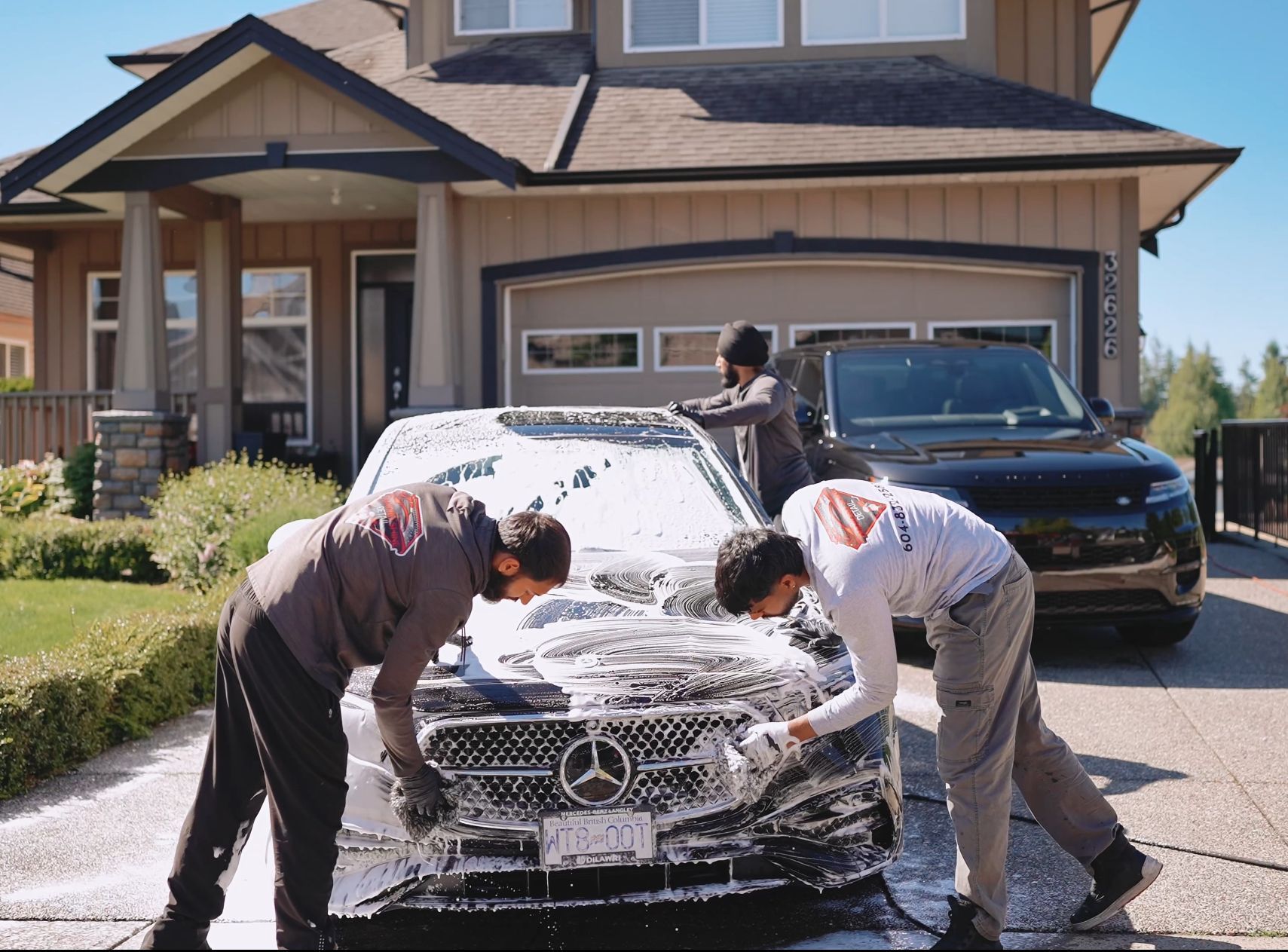
Exterior work begins with a hand wash of the body, wheels, and tires. Then comes dressing for trim and tires. That's where most basic packages stop. Mid-tier packages add paint decontamination to remove bonded contaminants, along with a paint sealant for protection. Top packages include clay bar treatment, single-stage polishing to remove light swirls, and hydrophobic windshield treatments.
The gap between a $150 detail and a $600 detail isn't just time. It's the difference between surface cleaning and actual restoration.
What Most Shops Exclude (And Won't Tell You)
Every shop has their own definition of "full detail." Here's what commonly gets left out without warning:
Engine bay cleaning almost never comes standard. Most shops consider it a separate service or skip it entirely. Same with headlight restoration, even when your lenses look like frosted glass.
Paint correction isn't part of any standard detail package, despite what marketing photos suggest. That mirror finish you see in their before-and-after shots? That's paint correction followed by protection, not a detail. If your paint has swirls, scratches, or oxidation, a detail will clean it but won't fix it.
Tar and bug removal might require extra time and charges, especially after highway trips or summer driving in the Fraser Valley. Basic packages often skip this step or don't allocate enough time to do it properly.
Stain removal from upholstery gets complicated fast. Most packages include shampooing, but set stains from coffee, food, or pet accidents usually need specialized treatment. That costs extra at most shops.
Odor elimination requires more than air freshener. Proper odor treatment needs enzymatic cleaners, ozone treatment, or replacement of affected materials. Standard details mask smells. They don't eliminate sources.
The exclusions exist for two reasons: time and liability. Complex problems take unpredictable time, and shops would rather underpromise than overcommit. Fair enough. Just know what you're actually buying.
Time Required for a Proper Detail
A proper full car detail takes 4-6 hours for a sedan in average condition. SUVs and trucks need 6-8 hours. Heavily soiled vehicles or those with pets and kids? Add another 2-3 hours.
Those $99 "full details" that promise same-day service? They're taking 90 minutes, maybe two hours. You can't shampoo carpets properly, let them dry, condition leather, decontaminate paint, and apply sealant in 90 minutes. The physics don't work.
Quick details cut corners somewhere. Either they're skipping steps, rushing through processes, or using inferior products that break down faster. Usually all three.
Professional interior and exterior detailing requires methodical work. Shampooed carpets need time to dry. Paint sealants need time to cure. Leather conditioner needs time to penetrate. Rush any step and the results won't last.
How Package Levels Affect Time and Results
Different detail packages require different time investments based on the depth of work:
- Basic packages (2-3 hours): Surface cleaning and maintenance for vehicles in good condition that are detailed regularly
- Mid-tier packages (4-5 hours): Deep cleaning with shampooing and basic paint protection for vehicles with moderate buildup
- Premium packages (6-8 hours): Comprehensive restoration with polishing, clay bar treatment, and protective treatments for vehicles needing significant attention
The time investment directly correlates with results. Proper drying time for shampooed surfaces prevents mold and mildew. Adequate polishing time removes defects instead of just hiding them. Sufficient curing time for sealants determines how long protection actually lasts.
When Your Car Actually Needs a Full Detail
Not every vehicle needs a full detail. Some need less, some need more.
You need a full detail if: your car hasn't been professionally cleaned in over a year, you're preparing to sell, you've accumulated significant interior staining or exterior contamination, or you want to establish a baseline of cleanliness for regular maintenance.
You probably don't need a full detail if: you maintain your vehicle regularly and just need a maintenance wash, your car is relatively new with minimal use, or you detailed it within the last 3-6 months and maintained it properly.
Vehicles with kids, pets, or daily highway use benefit most from full details. The constant exposure to dirt, food, fur, and road grime creates buildup that basic washes can't address. Same for vehicles exposed to Fraser Valley mud, agricultural dust, or winter road salt.
Older vehicles with neglected paint often need more than a detail can provide. If your clear coat is failing, no amount of cleaning will fix it. If your paint is heavily oxidized or covered in deep scratches, you're looking at paint correction before any protection makes sense.
When to Upgrade to Paint Correction or Ceramic Coating
Here's the decision point: a detail cleans your paint. It doesn't fix it or permanently protect it.
Paint correction removes scratches, swirls, oxidation, and other defects through multi-stage polishing. If you're bothered by how your paint looks in direct sunlight, or if you run your hand over the surface and feel rough contamination even after washing, you need correction before any detail or protection.
Most vehicles over three years old benefit from correction. Daily drivers accumulate damage from automatic car washes, poor washing techniques, and environmental factors. A detail will clean that damage. Correction removes it.
Ceramic coating makes sense after correction or on new vehicles with clean paint. The coating bonds to your clear coat, creating a semi-permanent protective layer that repels water, resists contamination, and makes future cleaning easier. But coating damaged paint just locks in those defects permanently.
The decision tree looks like this: Is your paint damaged? Yes → correction first, then coating. No → coating now if you want maximum protection. Maybe → get an honest assessment from someone who won't just sell you services you don't need.
For Fraser Valley vehicles facing rain, mud, road spray, and seasonal contamination, ceramic coating extends the life of your paint and reduces maintenance between details. But only if applied correctly to properly prepared paint.
The Real Cost of a Full Detail
Full car detail packages at reputable shops in the Fraser Valley range from $175 for basic cleaning to $600+ for comprehensive restoration with protection. Check out Diamond Shine Detail's full detail packages for specific pricing and what's included at each level.
The price reflects time, products, and expertise. Cheap details use cheap products and rush through steps. Expensive details take time, use professional-grade materials, and don't cut corners.
You're not just paying for the work done today. You're paying for how long the results last and how well they protect your vehicle going forward. A $99 detail that looks good for two weeks costs more per month than a $400 detail that lasts four months.
Most vehicles benefit from full details 2-4 times per year, depending on use and conditions. More frequent maintenance washes between details extend results and reduce the need for intensive work each time.
The shops that survive in this industry earn trust by telling customers the truth about what they need, what they don't need, and what each service actually includes. Everything else is just marketing.