PPF Doesn't Care What It's Protecting. That's the Point.
Here's a secret the film never told anyone: it doesn't know it's on a car. Paint protection film is a urethane bodyguard with no opinions. Put it on a fender, it stops rock chips. Put it on a headlight, it stops the sun from turning clear plastic into frosted glass. Put it on a hand-inlaid marble tabletop in a busy restaurant, and it does the exact same job it's always done. It takes the hit so the surface underneath doesn't have to. Most people think PPF is a car thing. It's not. It's a "things you'd be sick about scratching" thing. The car was just the first customer.
[IMAGE: Diamond Shine technician squeegeeing PPF onto a white marble inlay table at Tasty Indian Bistro, floral stonework visible beneath the film]
What PPF Actually Is
Strip away the marketing and PPF is a thick, self-healing thermoplastic urethane film with an adhesive layer engineered to grip without damaging. It was born on helicopter rotor blades during the Vietnam era, because rotor blades were getting shredded by debris and somebody needed them to stop. That's the DNA of this product. It wasn't invented to look pretty. It was invented to absorb punishment. The gloss came later.
- Self-healing top coat. Light swirls and scuffs disappear with a little heat. The film literally repairs itself.
- Impact absorption. The thickness soaks up hits that would chip paint or gouge a finish.
- UV blocking. Sunlight fades everything it touches. Film slows that clock way down.
- Stain resistance. Coffee, curry, road tar, bird droppings. It all wipes off the film instead of soaking into the surface.
- Invisible when installed right. Done properly, you cannot tell it's there. That last part matters. Anyone can slap film on a surface. Making it disappear is the craft.
The Classic Jobs: Vehicles
This is where PPF built its reputation, and the logic hasn't changed. Your car spends its life getting sandblasted at highway speed. Every commute is a slow-motion attack on your clear coat.
- Full fronts. Hood, bumper, fenders, and mirrors: the zones that eat gravel for a living. The most common package for a reason.
- Full wraps. Every painted panel, protected. The move for new vehicles and anything you plan to keep.
- Headlights and fog lights. Bare polycarbonate goes cloudy and yellow. Film keeps lenses clear and keeps replacement bills off your desk.
- Rocker panels and door edges. The spots your shoes, your kids, and other people's doors attack daily.
- Interior trim and screens. Piano black plastic scratches if you look at it wrong. Film ends that argument before it starts.
The Jobs Nobody Thinks About
A scratch doesn't ask what it's scratching. It doesn't care if the surface cost forty dollars or forty thousand. Which is why film keeps showing up in places the brochures never mentioned.
- Motorcycle tanks and fairings. Jacket zippers and belt buckles are tank killers. PPF doesn't flinch.
- Boats and marine surfaces. Salt, sun, dock rash. Same enemies, different battlefield.
- RVs and trailers. Big flat panels, big highway miles, big rock-chip exposure.
- High-traffic home surfaces. Stair risers, cabinet edges, countertop zones that take daily abuse.
- Commercial furniture and decorative finishes. The one that surprises everyone, and the reason we're writing this.
Case in Point: The Marble Tables at Tasty Indian Bistro
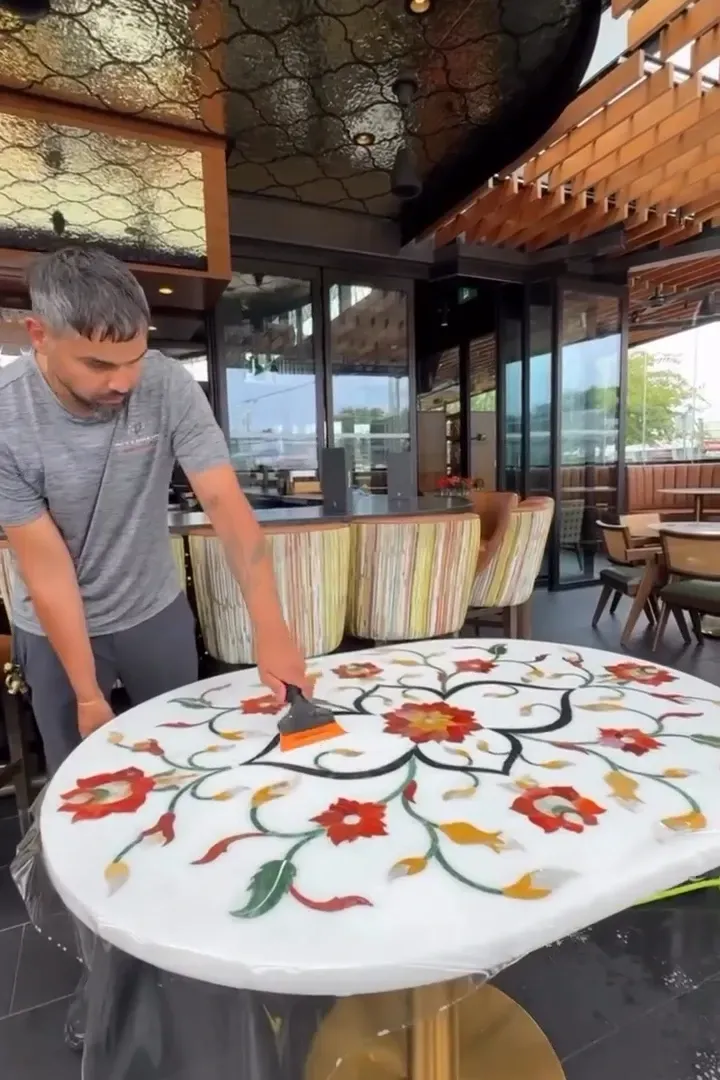
We recently wrapped the tables at Tasty Indian Bistro, 33338 South Fraser Way in Abbotsford. These aren't ordinary tables. They're white with hand-set floral inlay, the kind of craftsmanship that would take an artisan weeks to complete and a careless dinner guest about four seconds to ruin. Marble is porous. It etches, it stains, it scratches. And a busy restaurant is basically a stress test with a lunch menu: hot serving dishes, dropped keys, rings, cutlery, spilled sauces, and a cleaning routine that runs multiple times a day, every day.
- The stonework stays untouched. Every plate, key, and spill lands on the film, not the inlay.
- Stains wipe clean. Turmeric and tomato-based sauces are marble's worst nightmare. On film, they're a paper towel problem.
- The look survives. The film disappears over the surface. Guests see the artistry, not the armor.
- The investment holds. Custom inlay tables aren't replaceable at any reasonable price. Protecting them costs a fraction of restoring them.
Nobody eating at those tables will ever know the film is there. That's the whole point. Good protection is invisible. Bad protection is a replacement invoice.
The Bottom Line
If a surface matters to you, because it's expensive, because it's irreplaceable, or just because you're the kind of person who notices scratches, PPF is on the table. Sometimes literally. Four wheels, two wheels, or four table legs, bring it to Diamond Shine. We'll film it before the world gets to it.